TEACHERS, AVOID THESE 5 COSTLY FINANCIAL MISTAKES BEFORE THEY RUIN YOUR FUTURE
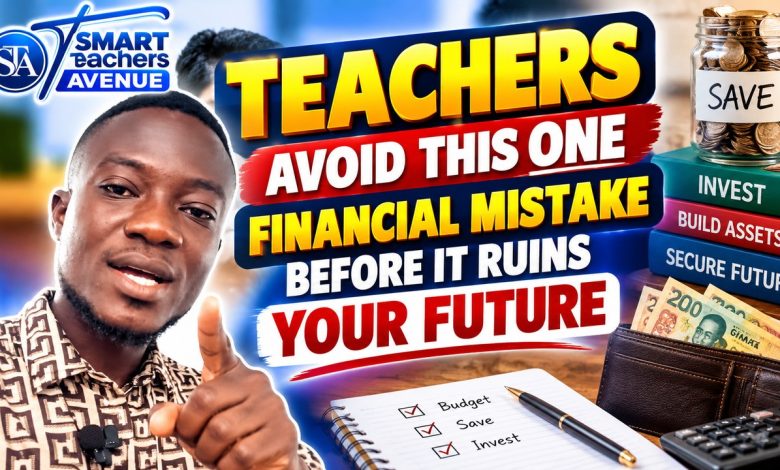
Financial mistakes teachers makes that can drain their salaries before the month ends. Mr. Atta Smart explains how social spending, impulse buying and failure to invest can undermine teachers’ financial future.

Many teachers work hard every month, yet struggle to keep money in their accounts for long. The salary arrives, bills are paid, invitations come in, and before long, the money is gone.
But what if the problem is not only how much you earn, but also how you spend it?
In a financial education video shared by Smart Teachers Avenue, narrator Mr. Atta Smart challenges teachers to examine the habits that quietly drain their income.
His message is simple: stop spending every cedi that comes into your hands and start putting part of your income to work for your future.
FINANCIAL MISTAKES TEACHERS MAKE: ATTENDING EVERY PROGRAMME
According to Mr. Atta Smart, one habit that can put pressure on teachers’ finances is feeling obliged to attend almost every social event.
There may be a funeral this weekend, a party next week, and a naming ceremony soon after. Teachers may attend these programmes and spend money on transport, refreshments, gifts or contributions.
One event may not seem expensive. But when these expenses happen repeatedly, the total can become significant.
The problem is not attending funerals, supporting friends or celebrating with family. These are important parts of community life.
The concern is attending every programme without considering whether the expense fits your budget.
DETAILED LESSON PLANS & SCHEMES OF WORK
Get detailed lesson plans and Schemes of Work for Nursery, KG, Primary, JHS and SHS to help you prepare, plan and teach effectively.
FINANCIAL MISTAKES TEACHERS MAKE: SAYING YES TO EVERY INVITATION
Mr. Atta Smart asks teachers to consider how financially successful people manage their social commitments.
His point is that people who are intentional about their finances can be selective about where they go and what they spend. They do not necessarily accept every invitation.
Teachers can apply the same principle without neglecting their relationships.
Before attending a programme, consider three questions:
- Is my presence truly necessary?
- Can I afford the transport, contribution or gift?
- Will this expense affect an important financial responsibility?
You do not have to attend every event to prove that you care about people. Sometimes, a sincere message, a phone call or support within your means is enough.
FINANCIAL MISTAKES TEACHERS MAKE: SPENDING BEFORE PLANNING
Another problem arises when teachers receive their salaries and immediately begin thinking about what to buy.
Food, clothing, household items and personal needs all require money. However, spending without a plan can leave little for emergencies, savings or investments.
Mr. Atta Smart warns that teachers can become more focused on consuming their income than using it to build their financial future.
A salary should not only support today’s needs. Where possible, it should also help prepare for tomorrow.
END-OF-TERM EXAMINATIONS FROM CRECHE TO SHS
Get quality End-of-Term Examination Questions with Marking Schemes for learners from Creche to SHS, carefully prepared to support effective assessment.
FINANCIAL MISTAKES TEACHERS MAKE: IMPULSE BUYING
Have you ever bought something simply because you saw it, wanted it at that moment, or felt you could afford it?
That is the kind of behaviour commonly described as impulse buying.
The danger is that repeated unplanned purchases can quietly consume money meant for more important priorities.
Before buying a non-essential item, pause and ask yourself:
- Do I genuinely need this?
- Did I plan for this purchase?
- Would keeping this money serve a more important purpose?
A short pause can prevent unnecessary spending. If the purchase is not urgent, consider waiting a day or two before deciding.
FINANCIAL MISTAKES TEACHERS MAKE: FAILING TO BUILD ASSETS
One of the central messages in Mr. Atta Smart’s video is that teachers should use part of their income to build assets rather than spending everything they earn.
An asset may help generate income, preserve value or support long-term financial goals. Depending on a person’s circumstances, examples could include a properly researched investment, productive business equipment or a business that has a realistic path to profitability.
However, not every purchase is an asset. Some purchases mainly create recurring costs, while some investments carry substantial risks.
Teachers should research carefully, understand the risks and avoid investing money needed for essential expenses or emergencies.
You do not have to start with a large amount. A realistic plan that you can sustain is more useful than committing money you cannot afford to lose.
READ RELATED RESOURCES HERE: ARE SOME TEACHERS HELPING STUDENTS CHEAT JUST FOR MONEY? 5 SERIOUS QUESTIONS GHANA MUST CONFRONT
FINANCIAL MISTAKES TEACHERS MAKE: WAITING UNTIL THE SALARY IS GONE
A practical way to improve money management is to decide what your salary must do before you begin spending it.
Start by listing essential expenses, including food, transport, housing, family responsibilities and debt repayments. Set a realistic amount for savings and, where affordable, long-term investment.
You can then set a limit for social events, gifts and entertainment.
The exact amounts will differ from teacher to teacher. The important thing is to make deliberate choices instead of allowing every invitation or purchase to determine how your money is used.
READ RELATED RESOURCES HERE: ARE SOME TEACHERS HELPING STUDENTS CHEAT JUST FOR MONEY? 5 SERIOUS QUESTIONS GHANA MUST CONFRONT
FINANCIAL MISTAKES TEACHERS MAKE: A QUESTION EVERY TEACHER SHOULD ANSWER
Mr. Atta Smart ends with a question that deserves an honest answer:
When you receive your salary, how many days does it last before the money is finished?
Does it last one week, two weeks or three weeks? Or does it seem to disappear almost immediately?
The answer may reveal something about your spending habits, financial commitments and the need for a better plan.
Share your experience respectfully in the comments. The aim is not to shame teachers, but to encourage honest conversations about money and practical ways to improve financial wellbeing.
READ RELATED RESOURCES HERE: ARE YOU AWARE? FWSC INVITES STAKEHOLDERS TO 2027 BASE PAY NEGOTIATIONS MEETING TODAY
FINANCIAL MISTAKES TEACHERS MAKE: START CHANGING ONE HABIT TODAY
You may not be able to change your salary overnight, but you can begin reviewing how you use it.
Be intentional about social spending. Plan before making purchases. Set realistic financial priorities. Build an emergency fund where possible, and research investments carefully before committing your money.
As Mr. Atta Smart emphasises, teachers should not think only about how to spend their income, but also about how to use it to build a more secure future.
Smart Teachers Avenue is committed to sharing financial education relevant to teachers and their professional lives.
Now, tell us: How many days does your salary last in your hands before it finishes?
Video source: Mr. Atta Smart, “Teachers Avoid This One Financial Mistake Before It Ruins Your Future.”
Share your experience and ideas in the comments. Your strategy could help another teacher take the first step.
Follow Smart Teachers Avenue on Facebook, TikTok and YouTube for practical teacher development, professional growth and financial education.
YOU CAN CONTACT US ON ↓
📞 Phone: +233 503910155 / +233233910155
📧 Email: info.teachersavenue@gmail.com
💬 WhatsApp: Click Here To WhatsApp Us
Follow Smart Teachers Avenue and Stay connected with us for daily educational resources, financial education, teaching tips and school leadership insights.
📘 Facebook – FOLLOW HERE
🎵 TikTok – FOLLOW HERE
▶️ YouTube – SUBSCRIBE HERE
✈️ Telegram Channel – JOIN HERE
👥 Telegram Community Chat: – JOIN HERE
👥 Facebook Community Chat: – JOIN HERE
WhatsApp Channel – FOLLOW HERE for daily updates, teaching resources and exclusive educational content.
Join our growing community of teachers across Ghana and beyond who trust Smart Teachers Avenue as their preferred platform for teaching resources, professional development, financial education and school leadership.