How Teachers Can Build Wealth Through Land and Property Investmen
Some teachers are building assets before retirement. Here are practical strategies that can help teachers turn a regular salary into long-term investments.

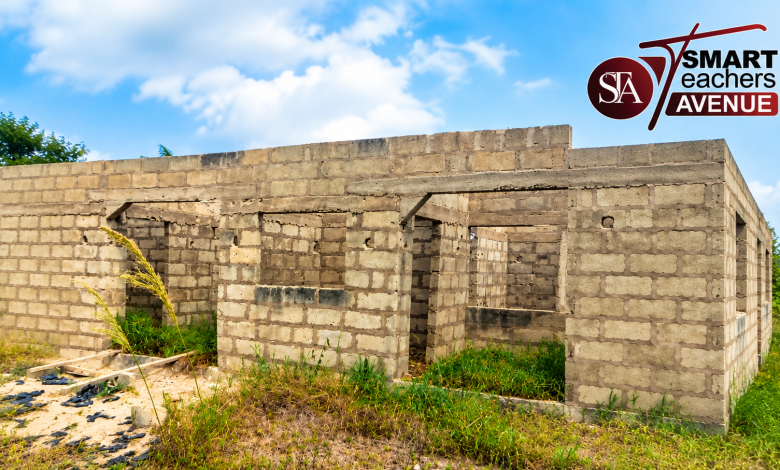
Property investment for teachers may seem difficult when you are working with a regular salary and several financial responsibilities. But some teachers are finding ways to save, acquire land and gradually build assets before retirement.
Have you ever driven through a developing community and noticed houses going up one after another?
You may have wondered: How are ordinary workers managing to build these properties?
A recent Smart Teachers Avenue video raises a similar question about teachers. The video highlights an observation that some teachers are purchasing land and undertaking building projects despite relying primarily on their teaching income. It then asks an important question: What financial strategies are making this possible?
For teachers considering property investment, there is no single strategy that works for everyone. However, consistent saving, financial planning, additional income and careful use of available financial facilities can help turn a regular salary into long-term assets.
Watch the Smart Teachers Avenue video that inspired this discussion:
1. Property investment for teachers should begin with a realistic financial plan.
One of the biggest mistakes people can make is starting a building project simply because they have some money available.
Property investment for teachers should begin with a plan.
A teacher who wants to own a house could first determine the preferred location, estimated land cost, documentation expenses, construction requirements and a realistic timeline.
The goal does not necessarily have to be building an entire house within one year.
Instead, the project can be divided into manageable stages:
- Year 1: Build an investment fund and identify suitable land.
- Year 2: Acquire and properly document the land.
- Year 3: Begin the foundation or another affordable stage of construction.
The actual timeline will differ from person to person. What matters is having a realistic plan that matches income, expenses and other financial responsibilities.
Starting small does not mean thinking small. It can mean creating a financial path toward a larger asset.
RELATED RESOURCES: Breaking News for GNAT ASH Data Bundle Users: A Major Update You Can’t Afford to Miss
2. Make Saving Part of Your Salary Routine
Saving whatever remains after spending can be difficult because there may be very little left at the end of the month.
A different approach is to decide how much to save when the salary arrives.
For example, a teacher could establish a dedicated property-investment savings account and transfer a fixed amount into it every month before spending on less essential items.
Research involving selected basic-school teachers in Ho Municipality found that teachers who saved part of their salaries were able to mobilise resources for investments, including movable and immovable property. The researchers also reported a positive relationship between saving and capital mobilisation among the teachers studied.
The study was conducted among selected teachers in Ho Municipality, so its findings should not be treated as representative of every teacher in Ghana. However, it illustrates an important principle: consistent saving can create investment capital over time.
The objective is not necessarily to save a huge amount every month.
The objective is to build a habit that moves you closer to your financial goal.
DETAILED LESSON PLANS & SCHEMES OF WORK
Get detailed lesson plans and Schemes of Work for Nursery, KG, Primary, JHS and SHS to help you prepare, plan and teach effectively.
3. Consider Land as an Initial Investment
For teachers considering property investment, purchasing land may be a more achievable first step than immediately financing an entire house.
Instead of thinking:
“I need enough money to build a complete house before I can start investing.”
A teacher could divide the objective into stages:
First: Acquire suitable land.
Second: Complete the necessary documentation.
Third: Develop the property gradually.
However, buying land requires serious due diligence.
A property should not be purchased simply because someone says the price is cheap or that the area will become valuable in the future.
The Lands Commission’s registration requirements highlight the importance of proper documentation, including an approved plan and consistency between ownership information, land size and location.
Before paying for land, prospective buyers should conduct the necessary searches and seek appropriate professional or legal assistance where required.
A cheap piece of land with ownership problems can become significantly more expensive than properly verified land.
A cheap piece of land with ownership problems can become significantly more expensive than properly verified land.
4. Build in Stages
A teacher does not necessarily need the complete cost of a finished house before beginning a property project. For property investment for teachers, taking a gradual approach can make a large construction project more manageable.
Construction can be approached in stages.
For example:
Land → Site preparation → Foundation → Blockwork → Roofing → Finishing
Each stage can be undertaken when the investor has the financial capacity to proceed.
This approach can make a large project feel more manageable, but it also requires discipline.
Money needed for food, children’s education, healthcare, emergencies and other essential responsibilities should not be diverted recklessly into construction.
RELATED RESOURCES : Side Hustles for African Teachers to Earn Extra Income
Building gradually is different from building without a financial plan.
A good property plan should fit into the teacher’s broader financial plan rather than putting the household under unnecessary financial pressure.
5. Look Beyond the Salary
A regular salary can provide financial stability, but teachers who want to accelerate their investment goals may also consider legitimate additional income opportunities.
Depending on their skills, time and circumstances, teachers could explore activities such as:
- Private tutoring
- Educational content creation
- Agriculture
- Small businesses
- Digital services
- Training and consultancy
- Other skills-based income opportunities
The purpose is not to encourage teachers to overload themselves with work.
Instead, an additional income stream could be assigned to a specific financial objective.
For example, a teacher might decide that income from a side business goes directly into a land or building fund, while the regular salary continues to cover household expenses and other obligations.
Separating these income sources can make it easier to track progress toward a specific investment goal.
6. Use Teacher-Focused Financial Facilities Carefully
Teachers may also have access to financial facilities that can support business, investment or housing goals. These facilities may also be relevant to teachers planning their property investment.
The Teachers Fund, for example, lists an Investment Capital Loan intended to support income-generating or investment activities. It also lists a separate Habitat Loan designed to support members undertaking housing projects.
According to the Teachers Fund’s published information, the Investment Capital Loan has a current maximum of GH¢50,000, while the Habitat Loan has a current maximum of GH¢60,000, with eligibility and documentation requirements applying.
These facilities should not be viewed as free money.
Before taking any loan, a teacher should understand:
- The repayment terms
- The applicable interest or charges
- Eligibility requirements
- Monthly repayment obligations
- Whether the investment can realistically generate enough value or income
- How repayment would affect household finances
A loan can support a well-planned investment, but the wrong loan can also create financial pressure.
The principle should therefore be simple:
Use financial facilities to support a plan—not to create a plan.
7. Learn Before You Invest
Making money and managing money are two different skills. This is particularly important when considering property investment for teachers, where land, construction and financing decisions can involve significant amounts of money.
A person can receive a regular salary and still struggle to build assets if there is no clear system for budgeting, saving, investing and managing debt.
A recent study involving 100 basic-school teachers in Yeji examined financial literacy and financial behaviour among teachers. The researchers reported generally positive financial behaviours, including budgeting, saving and long-term planning, while also identifying gaps in areas such as understanding compound interest and investment returns.
Because the study involved 100 teachers in Yeji, its findings should not be interpreted as a national measurement of all Ghanaian teachers.
Nevertheless, it reinforces an important point: financial education matters.
Before committing money to land, construction, a business or another investment, teachers should understand the risks, expected returns, costs and legal requirements involved.
The more informed the decision, the easier it becomes to distinguish an investment opportunity from a financial trap.
The Real Strategy Is Consistency
When people see a completed house, a large building or a developed piece of land, they may only see the final result.
They may not see the years of saving, planning, sacrifices, additional income and gradual construction that came before it.
That is why wealth building should not always be measured by what someone has already achieved.
It can also be measured by whether the person is consistently moving toward a financial goal.
For a teacher, the journey could begin with:
A savings plan.
Then:
A land fund.
Then:
A properly verified piece of land.
Then:
Gradual property development.
And eventually:
A completed asset.
The process may take years, but starting with a realistic plan can be more useful than waiting until the perfect financial opportunity appears.
A teacher who cannot build a complete house today may still be able to begin laying the financial foundation for one. Successful property investment for teachers is therefore less about finding a quick shortcut and more about building a sustainable financial strategy over time.
END-OF-TERM EXAMINATIONS FROM CRECHE TO SHS
Get quality End-of-Term Examination Questions with Marking Schemes for learners from Creche to SHS, carefully prepared to support effective assessment.
What Can Teachers Learn From Those Already Investing?
The Smart Teachers Avenue video raises an interesting question: if some teachers are managing to acquire land and build properties from teaching income, what are they doing differently?
The answer may not be one secret investment formula.
It could be a combination of:
- Consistent saving
- Financial discipline
- Long-term planning
- Additional income
- Careful land acquisition
- Gradual construction
- Financial education
- Proper use of credit
- Patience and consistency
The important lesson is not to copy another person’s financial strategy blindly.
Instead, teachers can study what works, understand their own financial circumstances and develop a strategy that matches their income and responsibilities.
RELATED RESOURCES : GES Issues Strong Warning Against Fake Recruitment Adverts and Appointment Letters
Your Turn: What Strategy Are You Using?
For teachers wondering how others are acquiring land and building properties while earning a regular salary, there may be more than one answer.
What financial strategy has helped you move closer to owning land, building a house or creating another long-term asset?
Have you started investing from your teaching income?
Do you have a side business that supports your investment goals?
Or are you still trying to figure out where to begin?
Successful property investment for teachers does not necessarily depend on earning a huge salary…
Share your experience and ideas in the comments. Your strategy could help another teacher take the first step.
Follow Smart Teachers Avenue for more practical conversations about teachers, professional development, financial education and opportunities.
You can contact us
📞 Phone: +233 503910155 / +233233910155
📧 Email: info.teachersavenue@gmail.com
💬 WhatsApp: Click Here To WhatsApp Us
Follow Smart Teachers Avenue and Stay connected with us for daily educational resources, financial education, teaching tips and school leadership insights.
📘 Facebook – FOLLOW HERE
🎵 TikTok – FOLLOW HERE
▶️ YouTube – SUBSCRIBE HERE
✈️ Telegram Channel – JOIN HERE
👥 Telegram Community Chat: – JOIN HERE
👥 Facebook Community Chat: – JOIN HERE
WhatsApp Channel – FOLLOW HERE for daily updates, teaching resources and exclusive educational content.
Join our growing community of teachers across Ghana and beyond who trust Smart Teachers Avenue as their preferred platform for teaching resources, professional development, financial education and school leadership.