

AFIA KOBI AMPEM GIRLS ENGINEERING CLUB: 7 REMARKABLE INNOVATIONS PROVING GIRLS CAN LEAD IN ENGINEERING
From an autonomous search-and-rescue watercraft to aircraft and drones, talented students in Ghana's Ashanti Region are demonstrating what girls can achieve through practical STEM education, mentorship and determination.

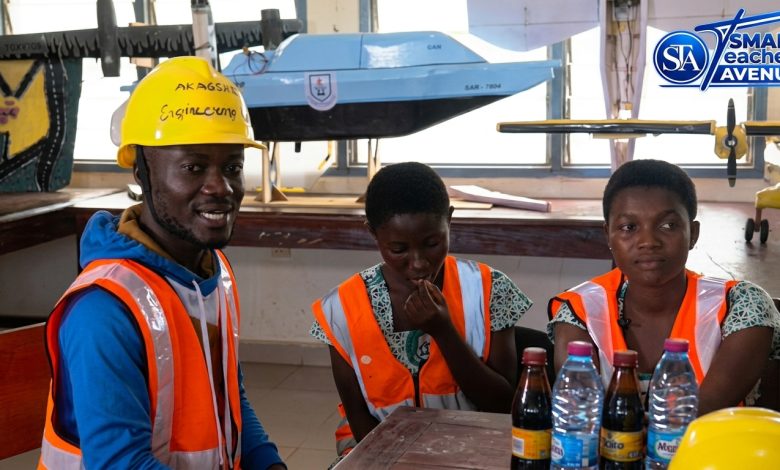
Afia Kobi Ampem Girls Engineering Club is giving Ghana another reason to pay attention to the creativity, intelligence and technical abilities of young female students.
At a time when conversations about Science, Technology, Engineering and Mathematics (STEM) education continue to grow, these students are demonstrating that young people can do more than study scientific theories in classrooms.
They can also design, construct, experiment, test and develop practical technological solutions.
Located at Trabuom in the Atwima Kwanwoma District of the Ashanti Region, Afia Kobi Ampem Girls’ Senior High School has become an interesting example of how practical education can inspire students to explore engineering.
In a recent discovery visit led by Atta Smart, team leader of Smart Teachers Avenue, the team visited the school to explore the remarkable work of its Engineering Club.
The visit provided an opportunity to witness the students’ autonomous search-and-rescue watercraft, observe its demonstration on water, explore their engineering laboratory and interact with the students and their instructors.
What makes the discovery particularly interesting is that these young ladies are not simply discussing what they hope to achieve in engineering.
They are already building things.
AFIA KOBI AMPEM GIRLS ENGINEERING CLUB: THE REMARKABLE WATERCRAFT PROJECT
One of the major highlights of the Smart Teachers Avenue discovery visit was the students’ autonomous search-and-rescue watercraft.
The project is designed to support search operations in water, particularly when people or important objects go missing.
According to the student interviewed during the visit, the purpose of the watercraft is to help search for people and objects beneath the water.
This is an important area of technological development.
Water-related emergencies can create serious challenges for rescue teams. Locating missing persons in rivers, lakes and other water bodies can be difficult, especially when visibility is limited.
Technologies designed to support search-and-rescue operations could therefore become valuable tools for emergency responders.
The students have demonstrated their willingness to explore this challenge through engineering.
END-OF-TERM EXAMINATIONS FROM CRECHE TO SHS
Get quality End-of-Term Examination Questions with Marking Schemes for learners from Creche to SHS, carefully prepared to support effective assessment.
AFIA KOBI AMPEM GIRLS ENGINEERING CLUB TESTS ITS WATERCRAFT
The Smart Teachers Avenue team witnessed the students preparing their watercraft for a practical demonstration.
The students took the craft to a nearby water body to test how it performed.
The demonstration offered an opportunity to move beyond the classroom and observe the project in an actual water environment.
It also highlighted an important part of engineering education: testing.
An invention does not become successful simply because it looks impressive in a laboratory.
It must be tested, evaluated and improved.
The experience gained from practical demonstrations helps students identify weaknesses and understand the adjustments required to improve their designs.
It is important to note that the demonstration does not, by itself, establish that the watercraft is ready for operational rescue missions. Further technical testing and validation would be needed before such a claim could be made.
Nevertheless, the students’ efforts represent an encouraging example of practical engineering education.
AFIA KOBI AMPEM GIRLS ENGINEERING CLUB: FROM WATERCRAFT TO AIRCRAFT AND DRONES
The watercraft is not the only engineering project associated with the school.
The Engineering Club has previously attracted attention for its work on aircraft and drones.
In April 2023, reports emerged that students from the school had designed and successfully test-flown an aircraft.
The project attracted public attention because it demonstrated the ability of secondary school students to engage in practical aerospace engineering.
In May 2023, the Ghana News Agency also reported that Deputy Finance Minister John Ampontuah Kumah donated GH¢100,000 to support the club’s engineering activities.
The support was intended to help the students continue their innovative work. A proposed ultramodern ICT centre was also announced.
More recently, in September 2026, the Ghana News Agency reported that the school’s Engineering Club had developed a 19.5-kilogramme multipurpose drone.
The drone was designed with potential applications including intelligence gathering, surveillance, firefighting, delivery services, marine patrol and border surveillance.
According to the report, the aircraft had a wingspan of four metres, a length of 3.5 metres and a height of 1.4 metres.
Its first test flight provided practical lessons that would inform further modifications.
These developments show that the watercraft forms part of a broader interest in engineering and technological innovation at the school.

AFIA KOBI AMPEM GIRLS ENGINEERING CLUB: THE STUDENTS BEHIND THE INNOVATIONS
Behind every successful engineering project are people who contribute their ideas, time, skills and determination.
During the Smart Teachers Avenue visit, the team interacted with some of the students responsible for the club’s activities.
One of the students interviewed explained that the watercraft was developed to search for people and objects beneath water.
She also explained that her name appeared on the craft because she had contributed to the introductory representation of the project.
When asked about the support they needed to improve their work, the students made an important appeal.
They explained that financial assistance would help them acquire the materials and equipment required for future projects.
They also expressed interest in visiting institutions and places where similar technologies are developed.
Such exposure, they explained, would help them learn about different engineering systems and inspire them to create more advanced projects.
This is an important point.
Students do not develop technical abilities through classroom lessons alone.
They also need opportunities to observe, experiment, interact with professionals and learn from people already working in their areas of interest.
AFIA KOBI AMPEM GIRLS ENGINEERING CLUB: MORE THAN 60 STUDENTS AND LIMITED SPACE
Another issue that emerged during the visit was the need for a bigger working environment.
According to the students, the club has more than 60 members.
However, their existing laboratory is too small to accommodate everyone comfortably.
Some members have therefore had to work in other classrooms.
The students explained that having a larger facility would allow members to work together, exchange ideas and learn from one another.
This is particularly important because engineering requires collaboration.
Students need space to assemble components, conduct experiments, store equipment and test their designs.
A well-equipped laboratory could also help younger members learn from students with more experience.
The appeal for a bigger facility should therefore not be viewed simply as a request for a larger classroom.
It is a request for an environment that can support practical learning, experimentation and innovation.
DETAILED LESSON PLANS & SCHEMES OF WORK
Get detailed lesson plans and Schemes of Work for Nursery, KG, Primary, JHS and SHS to help you prepare, plan and teach effectively.
AFIA KOBI AMPEM GIRLS ENGINEERING CLUB: WHAT SUPPORT DO THE STUDENTS NEED?
During the interview, the students and their coordinator outlined several areas where assistance would make a difference.
Their requests went beyond financial support.
The major needs identified during the visit include:
1. Financial assistance
The club needs financial resources to purchase materials, equipment and components for its engineering projects.
2. A bigger engineering laboratory
The existing workspace is insufficient for a club with more than 60 members.
A larger facility would allow students to work together and accommodate future growth.
3. Engineering materials and components
The coordinator specifically mentioned the need for different types of motors, including brushed and brushless motors, alongside other materials used in their projects.
4. Advanced equipment
The students and their coordinator would benefit from access to equipment such as 3D printers and CNC machines.
These technologies can support prototyping, precision manufacturing and the development of more advanced engineering components.
5. Technical exposure and mentorship
The club needs opportunities to interact with universities, engineering institutions, technology companies and experienced professionals.
6. Educational and institutional partnerships
The students also need support that can connect their current practical experience to further education and professional opportunities after secondary school.
These requests provide a clear picture of what the club needs to move from its current achievements to more advanced projects.
AFIA KOBI AMPEM GIRLS ENGINEERING CLUB: THE COORDINATOR’S MESSAGE TO GHANA
The Smart Teachers Avenue team also interviewed the Engineering Club’s coordinator, Gloria Angela, who shared her experience working with the students.
She described the experience as exciting and rewarding.
According to her, watching the students develop practical inventions has been a source of satisfaction.
She also explained how she helps transform science-related knowledge into practical activities.
Her message to girls who believe engineering and robotics are exclusively for boys was particularly important.
She encouraged anyone with an interest or passion for engineering to explore the field.
Her position was clear: engineering should not be restricted by gender.
Girls who have the interest, determination and opportunity should be encouraged to participate.
This message is important for students who may have developed an interest in technology but are discouraged by stereotypes about careers traditionally associated with men.
AFIA KOBI AMPEM GIRLS ENGINEERING CLUB: THE TEACHER BEHIND THE STUDENTS’ WORK
An important part of the visit was the opportunity to interact with the man guiding the students through their engineering activities.
The club’s lead engineer and tutor, Sir Ferdinand Sam, explained that the students needed more than financial support.
He emphasised the importance of building a strong social support system around the club.
According to him, once society recognises the value of what the students are doing, different forms of assistance can follow.
He appealed to teachers, university lecturers, technical institutions, investors, companies, non-governmental organisations and other stakeholders to support the students.
He also highlighted the importance of creating pathways for the students after completing their secondary education.
One of his major concerns was that the technical knowledge and practical experience acquired by the students should not go to waste after they leave school.
He therefore appealed to universities and other institutions to consider creating opportunities that would allow the students to continue developing their engineering abilities.
He also mentioned the need for advanced equipment, including 3D printers and CNC machines, as well as suitable working facilities and technical materials.
His appeal was not simply about supporting one school.
He described the work as part of a wider national development agenda.
The message is worth considering.
When students develop practical skills at an early age, society should provide opportunities for those skills to grow.
READ RELATED RESOURCES HERE: GHANA’S REMARKABLE MONKEY CEMETERY: DISCOVER THE SACRED MONKEYS OF BOABENG-FIEMA
AFIA KOBI AMPEM GIRLS ENGINEERING CLUB: WHY THIS STORY MATTERS TO GHANA’S EDUCATION SYSTEM
The achievements of these students raise an important question about the direction of education in Ghana.
Are students being given enough opportunities to apply what they learn in classrooms?
For many years, discussions about education have focused heavily on academic performance, examinations and certificates.
These remain important.
However, education must also prepare learners to identify problems, think critically and develop practical solutions.
The work of the Engineering Club demonstrates the value of connecting scientific knowledge with practical experience.
Consider what students can learn through a project such as the rescue watercraft.
They can explore:
- Physics through movement, force and energy.
- Mathematics through measurements and calculations.
- Computer science through programming and control systems.
- Electronics through circuits, sensors and motors.
- Engineering through design, construction and testing.
- Environmental studies through the investigation of water-related challenges.
This is what practical STEM education should encourage.
Instead of treating subjects as isolated areas of study, students can discover how different disciplines work together to solve real-world problems.
READ RELATED RESOURCES HERE: THE BIG MISTAKE: WHY TEACHERS STRUGGLE TO BUILD THEIR HOUSES
WHAT OTHER SCHOOLS CAN LEARN FROM AFIA KOBI AMPEM GIRLS ENGINEERING CLUB
There are valuable lessons other schools can take from this example.
First, encourage students to experiment.
Students should be given opportunities to turn their ideas into practical projects.
Second, establish and strengthen STEM clubs.
Engineering, robotics, science and technology clubs can help learners discover interests that may not become obvious through ordinary classroom instruction.
Third, support teachers who promote practical learning.
Teachers need encouragement, training, resources and institutional support to guide students through practical projects.
Fourth, involve industry and universities.
Partnerships can expose students to professional equipment, technical knowledge and experienced mentors.
Finally, celebrate innovation.
When students see their efforts recognised, they may become more confident about exploring challenging subjects and careers.
AFIA KOBI AMPEM GIRLS ENGINEERING CLUB: A CALL FOR SUPPORT FROM GOVERNMENT, INDUSTRY AND THE PUBLIC
The students have demonstrated enthusiasm and a willingness to learn.
Their coordinator has provided guidance.
Their tutor has helped transform ideas into practical engineering projects.
The next important step is to build a stronger support system around them.
The government, educational institutions, universities, engineering companies, technology firms, development organisations and private individuals all have a role to play.
Support does not necessarily have to come in the form of large financial donations.
It could include:
- Providing engineering materials and components.
- Donating computers and technical equipment.
- Supporting the construction or expansion of their laboratory.
- Offering professional mentorship.
- Organising educational visits.
- Providing technical training.
- Creating internship and scholarship opportunities.
- Connecting students with universities and engineering professionals.
These interventions could help the students improve their existing projects and explore more advanced innovations.
Most importantly, they could help ensure that the students’ interest in engineering continues beyond secondary school.
READ RELATED RESOURCES HERE: MR YANKS VEGETABLE FARMING JOURNEY: HOW GH₵1 GREW INTO A 20-ACRE FARM
AFIA KOBI AMPEM GIRLS ENGINEERING CLUB: SMART TEACHERS AVENUE DISCOVERS AND CELEBRATES YOUNG INNOVATORS
The visit to Afia Kobi Ampem Girls’ Senior High School forms part of Smart Teachers Avenue’s commitment to discovering, highlighting and celebrating remarkable talents across Ghana and the African continent.
Led by team leader Atta Smart, the Smart Teachers Avenue team continues to explore schools, communities and institutions where individuals are doing exceptional things.
This particular discovery has brought attention to young female students who are challenging stereotypes and demonstrating the possibilities of practical engineering education.
The visit also provided an opportunity for the students to communicate their needs directly to the public.
Their message is simple: they have the passion, they have the ideas and they are willing to learn. What they need now is greater support, better facilities and opportunities to develop their abilities.
Their story should encourage teachers, parents, school administrators and education stakeholders to look beyond examination results and recognise the importance of nurturing practical talents.
Ghana has young people with the potential to contribute to technological development.
What they need is an educational environment that gives them the opportunity to explore, create and improve.
The achievements of these students should not end as an interesting video or a moment of social media excitement.
They should become a reason for sustained investment in practical education and young innovators.
The next generation of Ghanaian engineers may already be sitting in our classrooms. We must give them the opportunity to build the future.
Share your experience and ideas in the comments. Your strategy could help another teacher take the first step.
Follow Smart Teachers Avenue on Facebook, TikTok and YouTube for practical teacher development, professional growth and financial education.
📞 Phone: +233 503910155 / +233233910155
📧 Email: info.teachersavenue@gmail.com
💬 WhatsApp: Click Here To WhatsApp Us
Follow Smart Teachers Avenue and Stay connected with us for daily educational resources, financial education, teaching tips and school leadership insights.
📘 Facebook – FOLLOW HERE
🎵 TikTok – FOLLOW HERE
▶️ YouTube – SUBSCRIBE HERE
✈️ Telegram Channel – JOIN HERE
👥 Telegram Community Chat: – JOIN HERE
👥 Facebook Community Chat: – JOIN HERE
WhatsApp Channel – FOLLOW HERE for daily updates, teaching resources and exclusive educational content.
Join our growing community of teachers across Ghana and beyond who trust Smart Teachers Avenue as their preferred platform for teaching resources, professional development, financial education and school leadership.
Story and discovery credit: Smart Teachers Avenue, led by Atta Smart.
SMART TEACHERS AVENUE – INFORMING, INSPIRING AND EMPOWERING TEACHERS.






One Comment