BELIEVE IN YOURSELF: 5 POWERFUL WAYS TO BUILD YOUR FUTURE FROM SMALL BEGINNINGS
Believe in yourself: Teachers, young people and graduates can begin improving their financial lives by changing their mindset, starting with what they have and learning how to turn small opportunities into meaningful progress.

Believe in yourself. It sounds simple, but for many teachers, graduates and young people struggling financially, this may be one of the hardest steps to take.
You may have a monthly salary that barely covers your expenses. You may have a business idea but feel that your savings are too small. You may look at people who appear successful and wonder how you could ever reach that level.
Sometimes, the biggest obstacle is not the absence of every opportunity. It is the belief that you cannot make progress unless you already have a large amount of money.
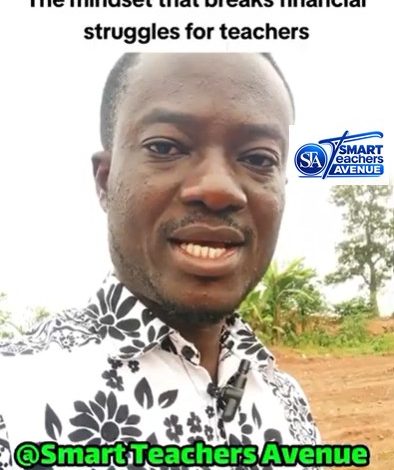
In a recent financial education video, Atta Smart of Smart Teachers Avenue challenges teachers and young people to reconsider that mindset. His message is straightforward: stop telling yourself that you cannot do something simply because you have not yet achieved it. Start small, learn what you need to know, and make deliberate use of the resources available to you.
This does not mean that positive thinking alone will solve financial problems. It means giving yourself permission to explore possibilities while combining confidence with knowledge, planning and action.
BELIEVE IN YOURSELF: 1. STOP TELLING YOURSELF YOU CANNOT MAKE IT
How many times have you heard someone discuss a business opportunity only for another person to respond, “I cannot do it”?
Sometimes, the person has not researched the business, calculated the startup cost or even spoken to someone who is already doing it. The decision has already been made in their mind: it is impossible.
Atta Smart identifies this attitude as a problem holding some teachers and young people back. When every opportunity is dismissed before it is properly examined, there is little room to learn, experiment or improve.
To believe in yourself does not mean assuming that every idea will succeed. It means being willing to investigate an opportunity before rejecting it.
If someone tells you that they earn additional income through a particular service, ask how the business works. Find out what skills it requires, what customers pay for and what challenges the person faces. You may discover that the opportunity is unsuitable for you, or you may find a smaller way to begin.
The important thing is to replace the automatic response of “I cannot do it” with a better question: “What would I need to learn or do to make this possible?”
That change in thinking can open the door to practical action.
BELIEVE IN YOURSELF: 2. START SMALL INSTEAD OF WAITING FOR A LARGE AMOUNT OF MONEY
One of the strongest points in Atta Smart’s message is that people should not wait until they have something big before they begin doing something meaningful.
A teacher may want to start a business but believe that only a substantial amount of capital can make it possible. A graduate may have an idea but keep postponing it until they secure a well-paying job. Another person may want to invest but feel discouraged because they cannot afford everything they see others buying.
Waiting for the perfect financial situation can become a reason for never taking the first step.
Starting small offers another approach. You can begin by researching the market, learning a skill, testing a product or service on a manageable scale, or saving towards a clearly defined goal.
For example, someone interested in selling goods could first identify what customers need and test demand before purchasing large quantities. Someone interested in digital services could build practical skills and a small portfolio before investing in expensive equipment.
The right starting point depends on the activity. Some businesses require licences, equipment or substantial working capital, while others can be tested with fewer resources.
The lesson is not to start recklessly. It is to stop assuming that every worthwhile goal requires you to begin at the highest level.
END-OF-TERM EXAMINATIONS FROM CRECHE TO SHS
Get quality End-of-Term Examination Questions with Marking Schemes for learners from Creche to SHS, carefully prepared to support effective assessment.
BELIEVE IN YOURSELF: 3. LEARN FROM SMALL BEGINNINGS
In his video, Atta Smart refers to Ghanaian businessman Despite as an example of someone whose journey began on a small scale.
The point of the example is to challenge the idea that success must begin with a large amount of wealth. People who have built successful businesses may have started with limited resources, learned from experience and expanded as circumstances allowed.
However, it is important to understand the lesson correctly. Hearing that a successful person started small does not mean that everyone who starts a small business will become wealthy. Every person’s circumstances, opportunities, decisions and risks are different.
What you can take from the example is the value of beginning at a level you can realistically manage, developing your understanding of the business and learning from the results.
You do not need to copy another person’s entire journey. You need to identify the principle that applies to your own situation.
If your income is limited, you might first focus on reducing avoidable expenses, building a small emergency reserve, learning a marketable skill or testing a modest business idea. These may appear less impressive than major investments, but they can help you build experience and make better decisions over time.
A small beginning is not a guarantee of a big ending. It is an opportunity to take the first step.
BELIEVE IN YOURSELF: 4. YOU DO NOT NEED FIVE PLOTS OF LAND TO BEGIN THINKING ABOUT PROPERTY
Atta Smart also uses land investment to illustrate the idea of starting small. He challenges the assumption that someone must acquire four or five plots before they can begin exploring property development or rental housing.
He points to the possibility of starting with a single plot or even a half plot, depending on what the person intends to do and what is legally and practically possible.
The broader message is that people should not automatically rule out an investment simply because they cannot afford the largest version of it.
However, property investment requires particular care. Buying land is not as simple as finding a small plot and paying for it. Prospective buyers need to investigate ownership, documentation, boundaries, planning restrictions, access roads and the suitability of the land for their intended use.
A half plot may not be suitable for every building design, and a single plot does not automatically make a rental project financially viable. Construction costs, permits, utilities, location, financing and expected rental income all matter.
For someone who cannot yet afford land, the first step might be to research property prices, understand the buying process, establish a savings target or learn how property projects are financed. There is no need to rush into a purchase to prove that you believe in yourself.
READ RELATED RESOURCES HERE: CHECKING ON STUDENTS DURING VACATION: 5 POWERFUL REASONS TEACHERS SHOULD STAY CONNECTED
BELIEVE IN YOURSELF: 5. USE THE MONEY YOU HAVE WISELY AND KEEP LEARNING
Having a small amount of money does not mean that every investment is suitable for you. It also does not mean that you should rush to put all your savings into a business.
Before spending money on an idea, ask yourself three questions:
– What exactly am I trying to achieve?
– What will it cost to get started and keep the activity running?
– What could happen if the business takes longer than expected to generate income?
These questions are especially important for teachers and young people who depend on limited monthly incomes.
If you are employed, remember that your salary must cover your essential needs. Avoid using money needed for food, rent, transport, school expenses or emergencies to finance an untested business idea.
You can begin by recording your income and expenses, identifying how much you can realistically set aside and learning about the activity you want to pursue. Where appropriate, test the idea on a small scale before committing more money.
Atta Smart also encourages viewers to ask questions rather than assuming they already know everything. This is an important part of the message. Confidence without knowledge can lead to costly mistakes, but confidence combined with learning can help you make more informed decisions.
DETAILED LESSON PLANS & SCHEMES OF WORK
Get detailed lesson plans and Schemes of Work for Nursery, KG, Primary, JHS and SHS to help you prepare, plan and teach effectively.
BELIEVE IN YOURSELF: WHAT IF YOU HAVE AN IDEA BUT NO STARTUP CAPITAL?
This is one of the questions Atta Smart directly addresses in his video.
Some people may have the desire to earn additional income but believe they cannot begin because they do not have money to invest. His invitation is for such viewers to identify themselves in the comments by writing “NO CAPITAL.”
The purpose is to open a discussion about activities that may be started with little or no upfront capital, depending on the person’s skills, resources and circumstances.
Some service-based activities, for example, may require more time and skill than money at the beginning. But it would be misleading to suggest that every business can be started entirely for free. Internet access, transport, tools, training and other costs may still apply.
If you have no startup capital, you can begin by identifying what you already know how to do, what people need and which skills you could develop without taking on unaffordable expenses.
Instead of borrowing money immediately, investigate whether you can test the idea through a small service, a legitimate partnership or a first paying customer.
The aim is to find a realistic starting point rather than pretending that financial limitations do not exist.
READ RELATED RESOURCES HERE: 2 FINANCIAL MISTAKES TEACHERS MAKE THAT CAN HOLD THEM BACK
BELIEVE IN YOURSELF: TELL SMART TEACHERS AVENUE WHAT YOU WANT TO DO
Atta Smart is inviting teachers, students, graduates and other young people to share their business interests so that Smart Teachers Avenue can respond with more tailored financial education.
If you have an idea but do not know how to begin, the invitation is simple: explain what you want to do and the resources available to you.
If you have no startup capital, write “NO CAPITAL” in the comments. If you have some money available, state the amount you are prepared to risk and the type of business you are considering.
Be realistic about your finances. Do not disclose bank details, passwords, identification numbers or other sensitive personal information in a public comment.
The more clearly you explain your goal, the easier it may be to discuss relevant considerations, likely costs and practical next steps. A tailored response can help you think through an idea, but it cannot guarantee that a business will succeed.
READ RELATED RESOURCES HERE: HOW TEACHERS CAN EARN EXTRA INCOME BEYOND THEIR SALARY
BELIEVE IN YOURSELF: YOUR FINANCIAL JOURNEY CAN START WITH ONE DECISION
Financial progress does not always begin with a large investment or a dramatic change in circumstances. Sometimes, it begins when you stop dismissing every opportunity, ask better questions and take a realistic first step.
That is the message Atta Smart brings to teachers and young people through Smart Teachers Avenue: believe in yourself, respect small beginnings, use your money carefully and seek knowledge before making financial commitments.
You may not be able to do everything today. You may not have the capital you want. But you can start by understanding your situation, identifying a practical goal and deciding what you need to learn next.
Now, let’s hear from you.
What kind of business would you like to start? How much capital do you currently have, if any? Or would you like to learn about opportunities that require little or no startup capital?
Share your experience and ideas in the comments. Your strategy could help another teacher take the first step.
Follow Smart Teachers Avenue on Facebook, TikTok and YouTube for practical teacher development, professional growth and financial education.
YOU CAN CONTACT US ON ↓
📞 Phone: +233 503910155 / +233233910155
📧 Email: info.teachersavenue@gmail.com
💬 WhatsApp: Click Here To WhatsApp Us
Follow Smart Teachers Avenue and Stay connected with us for daily educational resources, financial education, teaching tips and school leadership insights.
📘 Facebook – FOLLOW HERE
🎵 TikTok – FOLLOW HERE
▶️ YouTube – SUBSCRIBE HERE
✈️ Telegram Channel – JOIN HERE
👥 Telegram Community Chat: – JOIN HERE
👥 Facebook Community Chat: – JOIN HERE
WhatsApp Channel – FOLLOW HERE for daily updates, teaching resources and exclusive educational content.
Join our growing community of teachers across Ghana and beyond who trust Smart Teachers Avenue as their preferred platform for teaching resources, professional development, financial education and school leadership.