
WHY TEACHERS NEED A STRONGER COLLECTIVE VOICE
TEACHER UNITY CAN HELP EDUCATORS BUILD A STRONGER COLLECTIVE VOICE, COORDINATE THEIR CONCERNS AND PRESENT A MORE ORGANIZED PROFESSIONAL FRONT.

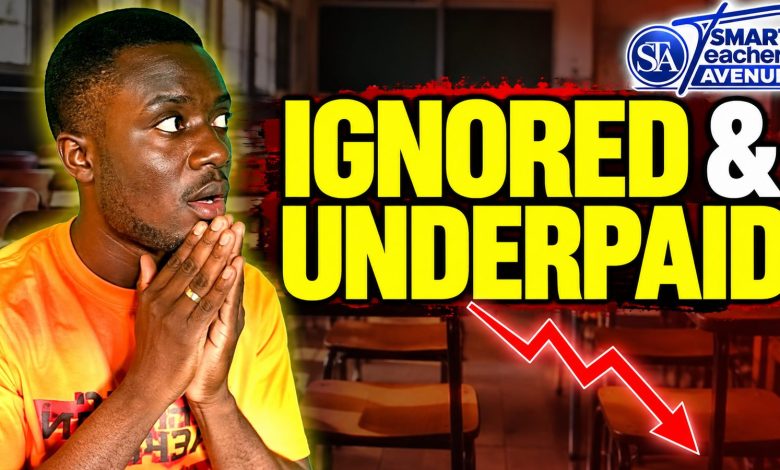
TEACHER UNITY has become an important part of the conversation about how teachers can address shared concerns, strengthen their representation and speak with a more coordinated voice. In a recent Smart Teachers Avenue video, Atta Smart, Lead Educator, examines the need for teachers and their unions to work together, build a stronger media presence and improve professional organisation.
Teachers speak about their challenges every day.
In staff common rooms, schools, districts and online spaces, conversations about salaries, allowances, inadequate teaching resources, working conditions and professional welfare are common.
But what happens when thousands of teachers have concerns, yet those concerns are being expressed in different places, through different organisations and with different priorities?
In a recent Smart Teachers Avenue video, Atta Smart, Lead Educator at Smart Teachers Avenue, argues that teachers need a stronger collective voice if they want their concerns to receive greater attention.
His discussion focuses on three areas he believes deserve attention: unity among teachers and their unions, teachers’ representation in the media, and stronger professional organisation and branding.
The first concern raised in the video is what Atta Smart describes as weak unity among teachers.
Teacher unity, in this context, is about finding common ground among educators and their unions when they are addressing shared concerns.
His argument is that teachers may complain individually about challenges affecting the profession, but individual frustration does not necessarily translate into coordinated advocacy.
A teacher may complain at school.
Another may raise a concern somewhere else.
Another group may discuss a completely different problem.
The concerns may all be legitimate, but according to the video, the impact can become weaker when there is no shared direction.
Stronger teacher unity could therefore help turn separate concerns into a more coordinated conversation.
That is where teacher unions become important.
WATCH THE FULL VIDEO HERE!!!!!
1. TEACHERS MAY BE SPEAKING, BUT ARE THEY SPEAKING TOGETHER?
The first issue raised in the video is what Atta Smart describes as weak unity among teachers.
Teachers may discuss their frustrations in staff common rooms, schools, districts and municipalities.
Individually, many may have strong opinions about what needs to change.
But individual complaints are different from coordinated advocacy.
The video points to the existence of multiple teacher unions and associations and asks whether teachers’ concerns could carry greater weight when organisations coordinate around shared priorities.
One union may be concentrating on salaries.
Another may be discussing allowances.
Another may be concerned about teaching and learning resources.
Each issue may be legitimate.
The concern raised in the video, however, is that when attention is divided across different priorities, teachers may struggle to present a clear collective agenda.
Atta Smart therefore calls for stronger coordination among teacher unions, particularly when there is an issue affecting teachers broadly.
READ RELATED RESOURCES HERE: Access Here: 5 Mandatory Pre-Tests for National Online CPD Workshop (All Teachers)
DIFFERENT UNIONS, DIFFERENT PRIORITIES
Teacher unity does not necessarily mean that every union must become one organisation. It can also mean coordinating around issues that different groups have in common.
The video points to the existence of multiple teacher unions and organisations.
Atta Smart argues that problems can arise when different unions concentrate on different priorities at the same time.
One may be discussing salary increases.
Another may be concentrating on allowances.
Another may be concerned about teaching and learning resources.
The video does not argue that these issues are unimportant. Rather, its concern is whether teachers can sometimes achieve greater impact when unions identify major common issues and advocate around them collectively.
This is the first major proposal in the video:
Teacher unions can maintain their individual identities while finding common ground on issues affecting teachers broadly.
In Ghana, joint action among teacher unions is not merely theoretical. Teacher unions have previously issued joint statements and taken common positions on employment and working-condition matters. Current reporting in September 2026, for example, shows teacher unions jointly raising concerns over promotion placements, arrears and other outstanding issues.
That demonstrates that coordinated advocacy is possible.
The question raised by the Smart Teachers Avenue video is whether such coordination can become stronger and more consistent when major issues affect teachers.
WHAT IF TEACHERS CHAMPION ONE MAJOR ISSUE TOGETHER?
Imagine several teacher unions simultaneously concentrating attention on the same major concern.
Their individual structures would remain.
Their memberships would remain.
But on that particular issue, the message would be consistent.
That is the kind of collective advocacy the video encourages.
Atta Smart’s position is that when teachers and their representative organisations communicate a shared priority clearly, their concerns may become harder for policymakers and other stakeholders to overlook.
The principle is straightforward:
Different unions can still speak with a common voice on common problems.
DETAILED LESSON PLANS & SCHEMES OF WORK
Get detailed lesson plans and Schemes of Work for Nursery, KG, Primary, JHS and SHS to help you prepare, plan and teach effectively.
2. WHO IS TELLING THE TEACHERS’ STORY?
The second major issue raised in the video is media representation.
Atta Smart argues that teachers sometimes allow other people to explain the realities of teaching on their behalf.
Radio presenters discuss teachers.
Television commentators discuss teachers.
Members of the public discuss teachers.
Social media users discuss teachers.
But how often are teachers themselves at the centre of those conversations?
The video argues that this matters because someone who has never worked in a classroom may understand an education issue differently from someone experiencing it directly.
Consider a teacher who says there are not enough textbooks for learners.
The statement may sound simple from outside the classroom.
But the teacher experiencing the shortage can explain what it actually means during a lesson: how available materials are shared, how instruction is affected and what adjustments have to be made.
That firsthand perspective can add important context to the public conversation.
READ RELATED RESOURCES HERE: How Teachers Can Build Wealth Through Land and Property Investmen
TEACHERS SHOULD HELP OWN THE NARRATIVE
Atta Smart therefore calls for a stronger teacher presence across radio, television and social media.
His argument is not that only teachers should be allowed to discuss education.
Rather, teachers should be more visible participants when issues directly affecting their profession are being discussed.
Teacher unions can play a role by helping knowledgeable educators participate in media conversations.
Teachers with relevant experience can explain classroom realities.
Educators who understand both teaching and public communication can help translate professional concerns into language the wider public understands.
When teachers participate directly in telling their own stories, the public gets an opportunity to hear not only what the problem is, but what that problem looks like inside an actual classroom.
3. THE PROFESSION ALSO NEEDS STRONG ORGANISATION
The third issue discussed in the Smart Teachers Avenue video is what Atta Smart describes as limited professional branding and organisation.
His argument is that the way a profession organises and presents itself can influence how its concerns are perceived.
For teachers, this goes beyond appearance.
It involves creating professional environments and systems in which teachers feel supported, engaged and respected.
The video calls on supervisors, administrators and others whose work involves teachers to consider whether their actions strengthen or weaken teachers’ motivation.
A profession cannot build a strong collective identity if the people within it constantly feel disconnected, discouraged or unsupported.
Atta Smart therefore argues that strengthening the teaching profession also requires creating conditions that allow teachers to participate actively and positively in their workplaces.
END-OF-TERM EXAMINATIONS FROM CRECHE TO SHS
Get quality End-of-Term Examination Questions with Marking Schemes for learners from Creche to SHS, carefully prepared to support effective assessment.
UNITY DOES NOT MEAN EVERY TEACHER WILL AGREE ON EVERYTHING
Teachers are not one person.
They work in different communities.
They belong to different unions.
They teach at different levels.
They have different professional and personal priorities.
Complete agreement on every issue is unrealistic.
But that does not prevent teachers from identifying areas where their interests meet.
Salary concerns can be shared.
Working-condition concerns can be shared.
Teaching-resource challenges can be shared.
Teacher welfare can be shared.
Professional development can be shared.
The message from the video is that these common concerns can become points around which teachers and their representative organisations coordinate.
READ RELATED RESOURCES HERE: NATIONAL CPD DAY IS HERE: All Teachers Must Take Part in This Nationwide Online Training
FROM INDIVIDUAL COMPLAINTS TO COLLECTIVE CONVERSATIONS
Perhaps the strongest question raised by the video is whether complaining individually is enough.
A teacher may be frustrated.
Another teacher somewhere else may have exactly the same concern.
Hundreds or thousands of others may share it.
But unless those concerns are organised, communicated and represented effectively, they may remain disconnected individual experiences.
Atta Smart’s call is therefore for teachers to move beyond isolated complaints toward stronger collective conversations.
That means teacher organisations coordinating where possible.
It means teachers participating in media discussions about their profession.
It means strengthening the professional identity of teaching.
And it means ensuring that discussions about teachers include the voices of people who actually understand classroom realities.
WHAT SHOULD TEACHERS AND THEIR UNIONS DO DIFFERENTLY?
The Smart Teachers Avenue video ultimately leaves teachers with a challenge.
If greater unity is needed, how should teacher unions work together more effectively?
If teachers need a stronger media voice, how can more educators participate responsibly in public discussions?
And if the profession needs stronger organisation, what should schools, unions, administrators and teachers themselves change?
Those questions cannot be answered by one teacher alone.
They require conversation across the profession.
LET’S HEAR FROM TEACHERS
Do you believe teachers and their unions could coordinate more effectively around common concerns?
What issue do you think deserves a stronger collective teacher voice?
And do teachers need greater representation on radio, television and social media when education issues are being discussed?
Share your experience and perspective in the comments.
This article is based on a Smart Teachers Avenue video presented by Atta Smart, lead educator at Smart Teachers Avenue. It organises the video’s three central arguments—teacher unity, stronger teacher representation in the media and professional organisation—into a written discussion for teachers and other education stakeholders.
Share your experience and ideas in the comments. Your strategy could help another teacher take the first step.
Follow Smart Teachers Avenue on Facebook, TikTok and YouTube for more discussions on teachers’ professional growth, financial growth and welfare.
You can contact us on
📞 Phone: +233 503910155 / +233233910155
📧 Email: info.teachersavenue@gmail.com
💬 WhatsApp: Click Here To WhatsApp Us
Follow Smart Teachers Avenue and Stay connected with us for daily educational resources, financial education, teaching tips and school leadership insights.
📘 Facebook – FOLLOW HERE
🎵 TikTok – FOLLOW HERE
▶️ YouTube – SUBSCRIBE HERE
✈️ Telegram Channel – JOIN HERE
👥 Telegram Community Chat: – JOIN HERE
👥 Facebook Community Chat: – JOIN HERE
WhatsApp Channel – FOLLOW HERE for daily updates, teaching resources and exclusive educational content.
Join our growing community of teachers across Ghana and beyond who trust Smart Teachers Avenue as their preferred platform for teaching resources, professional development, financial education and school leadership.